

Practical site guide
Tracing a wall-seepage pattern
Common clues
- The mark changes after rain from one direction.
- Dampness follows nearby bathroom, kitchen or pipe use.
- Efflorescence or peeling returns after repainting.
What should be checked
- External joints, cracks, windows and coatings
- Roof, balcony or wet-area connections above
- Ground-side pressure for basement or retaining walls
Important limits
- Interior paint does not stop an external water source.
- Moisture readings need context and recent-condition notes.
- Restricted access can limit the repair that is possible.
A sensible sequence
- 1Record when the symptom appears.
- 2Inspect the likely source and connected paths.
- 3Agree the repair scope and its limitations.
- 4Complete, protect and monitor the repair.
We specialise in professional repair and waterproofing of interior and external walls leakages.
WALL SEEPAGE REPAIR
About Wall Seepages
We provide the interior with an exterior waterproofing of walls and surfaces as well as leakage repair services to prevent seepages and water intrusion to your property. Sustained intrusion caused by leakage due to structural weakness can cause damage to your property.
Also, sustained water intrusion through walls can cause severe structural issues that are difficult and costly to repair if not detected early. Therefore, regular inspection of your property to check for potential susceptibility to the elements is essential in our tropical climate. This is especially critical if you have a balcony as water seepage could threaten the integrity of your building foundations.
Moisture Through Walls
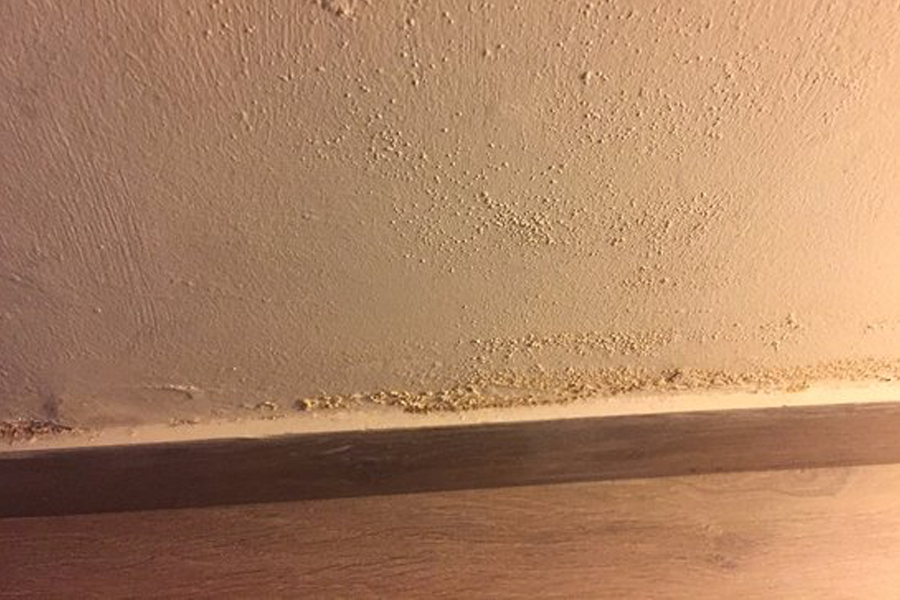
Water gradually trickling through a house wall by means of pores, cracks or shallow joints is called wall seepage. (Walls) exposed to outdoor (weather) in a very humid environment, where they will be wet by rain regularly, over time the moisture will build up in the wall structure. Typically one will see it as a discoloured and paint that is peeling, or efflorescence or white powdery deposits (salt) on the wall. Although at first the symptoms that are visible may seem very slight, over time the moisture penetration can lead to the finish being damaged and the structural materials getting weakened. Waterproofing involves treating the wall in a manner so that water which comes from the outside can no longer find its way through the wall while at the same time the wall can dry out naturally. Getting to the bottom of wall seepage will be like a stop to the dampness to spread throughout the rest of the building.
Common Causes and Signs of Wall Seepage
Here are the typical causes of a wall waterproofing breakdown, which could be due to poor construction or lack of maintenance over time:
- Insufficient curing time for concrete structures
- Failure to prime surfaces to protect against moisture
- Poor workmanship and installation of waterproofing systems
- Heavy rainfall that causes water to enter into the basement from the outside
- Poorly designed downspout extensions that accumulate water
- Clogged leaves and debris around drainage causing puddles
- Leaky pipes
- Insufficient slope or gradient to drain off water
- High water table forces water to accumulate between the wall and floor
Common signs of water seepage in a wall include:
- Cracks on walls and floors
- The appearance of droplets of water and moisture
- Accumulation of salt in the form of white/yellowish stains
- Bubbling or peeling paintwork
- Swollen concrete


Wall Seepage Waterproofing Repair
Water intrusion due to seepage issues is not common in homes and offices, usually manifesting in ceiling leakage and toilet leakages. These leakages might go unnoticed until the inhabitants observe water stains on ceilings or walls surfaces or the formation of moulds. As water can penetrate micro-cracks, such structural intrusion will not be easily noticeable by its users. Over time, due to corrosion, water can damage the structural integrity of the building, which is usually accompanied by the growth of fungi and other allergens that create health risks for users. That is why proper wall waterproofing is important to provide a layer of insulated from the weather.
By waterproofing the walls property, the condition will be preserved for longer period of time. The building will therefore be kept clean without any water penetrating through its surfaces. Durability will also be enhanced with proper maintenance, thereby reducing the future risk of moisture penetration. This is especially so when waterproofing membranes might wear off over time, leading to the onset of water seepage in areas most vulnerable to the elements.
Basement wall waterproofing
Water leakages commonly occurring in basements involve areas around pipe fittings and through fenestrations. Water can also penetrate through the concrete structures and enter the building foundations in severe cases.
Basement wall waterproofing techniques include applying waterproofing paint on the interior walls, which maintains the interior from water intrusion but is not a long term solution as water might still seep through the cracks into the concrete. Exterior wall waterproofing including the foundations is therefore critical for the long-term durability of the building.
Shower wall waterproofing
It is important to waterproof shower walls as grout joints are not normally water-resistant. This will help prevent leaks and lower the risk of excessive moisture through the surfaces, which causes the growth of fungi.
Foundation wall waterproofing
Any water seepage might eventually enter the foundation walls, threatening the very structural integrity of the building. This might require waterproofing the foundation wall, which in serious cases, requires some degree of excavation around the perimeter of the house.
Parapet wall waterproofing
Parapets, the areas where roofing and walls join, need to be protected from rainwater intrusion. Applications of waterproofing for parapets typically involve the installation of materials to create a waterproof membrane under the coping.
Retaining wall waterproofing
Retaining walls which are constructed to manage soil requires proper waterproofing as they are constantly subject to hydrostatic pressure due to standing water. This could lead to water seepage and dampness entering through cracks in the concrete, destabilising the wall over time.
Brick wall and concrete wall waterproofing
Concrete and brick walls require cementitious waterproofing, especially in wet areas which are constantly subject to wet conditions. It involves the application of a liquid membrane which may be flexible to act as a reliable barrier against water penetration.


Interior and External Wall Seepage Repair
Our team can survey the affected area, identify likely water paths and recommend a repair suited to the observed condition. Our assessment is free for all interior and external wall waterproofing and leakage repair services. Following which, we will be able to target the causes or areas or weakness prone to water infiltration and come up with an effective solution that insulates your building against future water seepages.
Tracing Wall Seepage by Its Pattern
Wall dampness can come from rain through an external wall, a failed window or façade joint, a roof or balcony above, a concealed pipe, an internal wet area or ground-side water affecting a basement. The location of peeling paint is not always the entry point because water can travel along joints and within finishes. The first task is to relate the symptom to weather, water use and adjacent building elements.
Photograph the area before and after rain and note wind direction when the façade is exposed. Check whether the dampness changes when nearby bathrooms, kitchens or pipes are used. Efflorescence suggests that moisture has moved through a mineral surface, but it does not identify the source by itself. Moisture readings can map the affected zone; they need to be interpreted with the construction and recent conditions. A broader water leak detection inspection may be appropriate when several sources are possible.
Exterior treatment is generally preferred for rainwater entry because it addresses water before it passes through the wall. The scope may involve repairing cracks, renewing sealant, treating a porous surface or restoring a failed coating. Interior paint alone can improve appearance temporarily but does not stop an exterior source. Where access is restricted, the proposed alternative should state what water path it is intended to control and what limitations remain.
Basement and retaining walls require separate consideration because water may act under pressure and enter through cracks, joints or penetrations. PU injection can target selected active paths from the accessible side, while broader conditions may require drainage, positive-side waterproofing or a combined system. See our guide to basement and car park waterproofing for these conditions.
After the source is repaired, allow the wall to dry before reinstating paint or finishes. Drying time varies with wall thickness, ventilation and the amount of retained moisture. Monitor the outline rather than relying on stain colour alone. If dampness returns under different conditions, reassess nearby sources instead of repeatedly sealing the visible patch.
What can cause wall seepage? We investigate rain through porous walls or failed joints, roof or balcony defects, concealed pipes, internal wet areas and basement water paths before choosing treatment. What are visible signs of wall seepage? We look for damp patches, efflorescence, peeling or bubbling paint, cracked joints and moisture near openings. The visible patch may not be the entry point. Do we handle interior and exterior wall seepage? Yes, we assess both sides where access permits. Exterior treatment is generally preferred for rainwater entry because it addresses water before it passes through the wall. Is wall seepage a serious problem? Continued moisture can damage finishes and building materials. We recommend tracing the source early, especially when dampness spreads, returns after rain or affects electrical areas. What information helps with a wall-seepage assessment? We use photographs, rainfall timing, wind direction, nearby plumbing use and details of roofs, balconies, windows or basements adjacent to the damp area.Frequently Asked Questions